Generating B2B leads is not simply about getting more names into your database. What matters is reaching businesses that fit your target market, connecting with the right decision-makers, and creating opportunities that can move toward a sale. A large number of leads may look good in a monthly report, but it does not mean much if those leads are not interested in your offer or are unlikely to become customers. For a B2B business, lead quality can have a much bigger impact on sales than lead volume alone.
This is why choosing a b2b lead generation agency in India should not come down to the number of leads an agency promises to deliver. You need to understand its approach, channels, qualification process, reporting, and ability to connect marketing activity with your actual business goals. This guide covers the key factors to consider, the lead generation services that may support your growth, how agencies differ, and what to evaluate before making a decision.
| Area | What It Means |
|---|---|
| Audience | Identifying the companies, industries, roles, and markets that are most relevant to your offer. |
| Intent | Understanding whether someone is researching, comparing options, looking for a solution, or ready to speak with a provider. |
| Action | Creating the right path for prospects to enquire, book a call, request information, or take another meaningful step. |
A B2B lead generation agency can support different parts of the journey from finding potential buyers to creating sales-ready opportunities. The exact work depends on your business model. A SaaS company may need search campaigns and demo bookings, while an industrial supplier may need content, website optimization, paid search, and a longer nurturing process.

Before launching campaigns, the agency needs to know who should be targeted. This usually involves looking at factors such as company size, industry, location, job role, business challenges, purchasing authority, and potential value. Your existing customers can also provide useful clues about which prospects are most likely to convert. Without a clear customer profile, campaigns can become too broad. You may receive plenty of inquiries while still struggling to find prospects who are commercially relevant.

Different buyers behave differently online. Someone actively searching Google for a specific business solution may have stronger immediate intent than someone who simply sees a social media post. At the same time, social content or educational resources may introduce your company to buyers before they start searching for a provider. An agency should therefore choose channels based on your audience and buying journey rather than automatically recommending the same marketing mix to every client.

Getting someone to your website is only one part of the process. The next question is what happens when they arrive. Landing pages, forms, calls to action, website content, trust signals, case studies, and follow-up processes can all affect whether a visitor becomes a lead. If campaigns are bringing traffic but the website is not converting it, increasing advertising spend may simply increase wasted traffic.

Not every B2B prospect is ready to buy immediately. Some may need more information before contacting a sales team. Others may have found your company while researching a problem they expect to solve several months later. Email campaigns, useful content, remarketing, automated follow-ups, and timely sales communication can help keep your company relevant while the prospect moves closer to a decision.
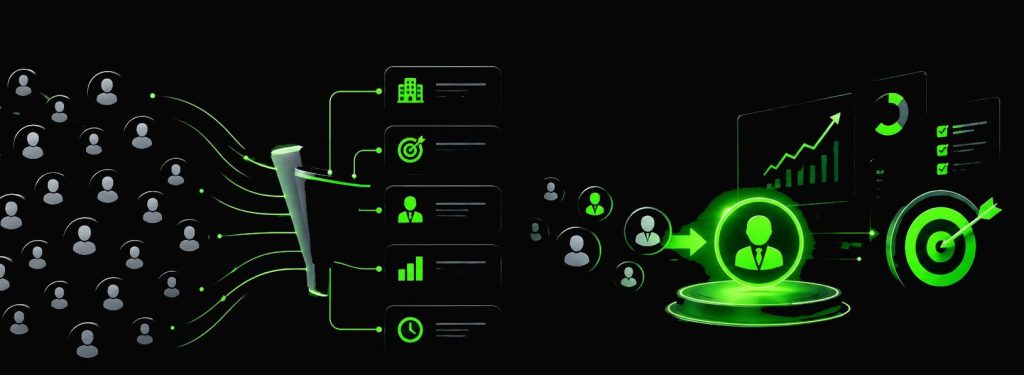
India has a large digital services industry, giving businesses access to teams with experience across SEO, advertising, content, automation, websites, analytics, and other marketing technologies. For companies targeting international markets, this can make India an attractive location for outsourcing parts of their marketing operation. A capable lead generation agency in India should be able to adapt its approach to the market you want to reach rather than relying on a fixed campaign template. However, location alone should never be the deciding factor.
The real question is whether the agency can understand your market. For example, an agency working with a US B2B company should understand that its audience, competitors, search behavior, messaging, and buying expectations may differ from those of an Indian business.
| Service | Primary Role | When It Can Be Valuable |
|---|---|---|
| B2B SEO | Builds organic visibility around relevant searches and business problems. | Useful when you want a sustainable source of search-driven traffic. |
| Google Ads | Captures demand from people actively searching for solutions. | Suitable when your audience already searches for your products or services. |
| Content Marketing | Answers questions and builds credibility before a sales conversation. | Helpful for complex products and longer buying cycles. |
| Email Marketing | Keeps prospects engaged after an initial interaction. | Valuable when prospects need time before making a decision. |
| Social Media | Builds awareness and reaches professional audiences. | Useful when your target buyers are active on relevant platforms. |
| Landing Pages | Gives campaigns a focused destination designed around one action. | Important when paid or organic traffic is not converting well. |
| Marketing Automation | Handles repetitive communication and lead workflows. | Useful when follow-up is inconsistent or difficult to manage manually. |
| Analytics & Tracking | Shows where leads come from and how they move through the funnel. | Essential when you need clearer performance and ROI data. |
The important point is that these services should work together. For example, search engine visibility can bring a potential buyer to a service page, strong content can answer their questions, a landing page can encourage an enquiry, and automation can help ensure the enquiry receives a timely follow-up.
MKR Techsoft takes a similar approach by looking at lead generation from a business perspective rather than focusing only on lead numbers. The aim is to connect marketing activity with the type of prospects a business actually wants to reach and the opportunities its sales team can pursue.
These criteria will differ between businesses. A small consultancy may consider a company with ten employees a strong prospect, while an enterprise software provider may focus on organizations with hundreds or thousands of employees. That is why lead quality should be defined around your sales process, not an agency’s generic definition.
Comparing top lead generation agencies in India can become confusing when every website makes similar promises. Instead of comparing taglines, ask questions that reveal how each agency actually works.

A good agency should be able to explain how it will research your market and define the people or companies worth targeting. If the answer is simply “we will target businesses interested in your service,” the strategy probably needs more depth.

Ask what information or actions make a lead sales-ready. This question is particularly important because one agency may count every form submission as a lead, while another may apply additional qualification criteria.

The agency should explain why particular channels make sense for your audience. You should not hear the same recommendation regardless of your industry, target market, product, or sales cycle.

Ask whether reporting will include only traffic and lead numbers or whether it will also show qualified leads, conversion rates, opportunities, cost per acquisition, and other business-focused metrics. A useful report should help you understand what is working and what needs to change.

No channel produces perfect results from day one. A capable agency should have a process for testing audiences, messages, landing pages, offers, keywords, creatives, and other campaign elements when performance is below expectations.
If you’re comparing the best lead generation company in India, look beyond rankings and consider how closely an agency’s experience and working process match your sales cycle and growth goals. A lower-cost package may not offer much value if it produces contacts that your sales team cannot realistically convert. The goal is not to find the agency with the longest list of services. It is to find one that can connect its work to the outcomes your business actually cares about.
You do not necessarily need an agency simply because you want more leads. There should be a clear business reason for bringing one in. An agency may make sense when your sales team is relying heavily on referrals, your website is not generating enough relevant inquiries, paid campaigns are difficult to manage internally, or your team lacks the time and expertise to build a consistent acquisition system.
It can also be useful when you are entering a new market and need to understand how to reach a different audience. Working with a lead generation company in India can be a practical option when your internal team needs additional expertise, technology, or campaign support.
Before hiring an agency, identify the specific problem you want to solve. “Get more leads” is a starting point, but a goal such as “generate qualified inquiries from US B2B companies looking for software development services” gives an agency a much clearer direction. The more specific your business objective, the easier it is to build, measure, and improve your campaign.
Choosing the right b2b lead generation agency in India is about more than the number of leads an agency can generate. What matters is whether those leads are relevant to your business and have a genuine chance of becoming sales opportunities.
At MKR Techsoft, we help businesses with B2B lead generation by combining targeted marketing with the right digital tools and strategies. We focus on reaching relevant audiences, connecting with decision-makers, and helping businesses create opportunities their sales teams can actually work with.
The goal is not simply to generate more leads. It is to build a lead generation process that supports your sales team and contributes to steady business growth.
An agency can provide multiple skills without requiring a full internal team, while an in-house team offers greater day-to-day control. The right choice depends on your resources and goals.
Tell us about your project and we'll come back within one working day with a scope, timeline and fixed price.