Getting a Google Ads campaign live is not difficult. The harder part is making sure the money behind that campaign is going toward the right searches, the right audience, and the right business goals. A campaign can get plenty of clicks and still bring very few useful leads. A business may also see its cost per lead increase without knowing why. In other cases, the ads may be working, but poor landing pages or incomplete conversion tracking make it difficult to see what is actually happening.
This is why choosing a Google Ads agency in India is not only about finding someone who can create campaigns. The right partner should understand the business, search intent, advertising budget, conversion journey, and what happens after someone clicks an ad. If you are comparing Google Ads agencies, the sections below explain what good management should look like and what you should expect from a reliable partner.
There is no single measure that makes one Google Ads agency the right choice for every business. A large agency may be a good fit for one company but not for another. An agency that works mainly with e-commerce brands may not have the same approach as one that manages campaigns for B2B services or local businesses.
For businesses searching for the best PPC agency in India, the more useful question is whether the agency understands their goals, audience, budget, and conversion journey. Instead of focusing only on a “No. 1” label, look at how an agency approaches the account.
A capable Google Ads agency should be able to:
The real question is not simply “Which is the No. 1 Google Ads company in India?”It is: “Which agency can make the right advertising decisions for my business?” That is a much more useful way to compare agencies.

A keyword can look relevant on paper but still trigger searches that have little value to the business. Reviewing actual search terms can reveal where this is happening. Google Ads provides a Search terms report for this purpose, and irrelevant searches can be added as negative keywords.

Someone searching for a specific service expects to see an ad that speaks directly to that need. A broad or generic message may get fewer useful responses.

A person searching for a specific service may not want to land on a general homepage. The closer the landing experience is to what the person searched for, the easier it is to continue the journey.

Clicks alone do not tell you whether advertising is helping the business. Forms, calls, purchases, bookings, or other valuable actions need to be measured based on the campaign goal.

Google Ads should not be launched and then left alone for months. Search terms, campaign performance, budgets, ads, and conversion data can all provide information for future decisions.

More clicks do not automatically mean more business. A campaign should be evaluated based on what those clicks contribute to the business.
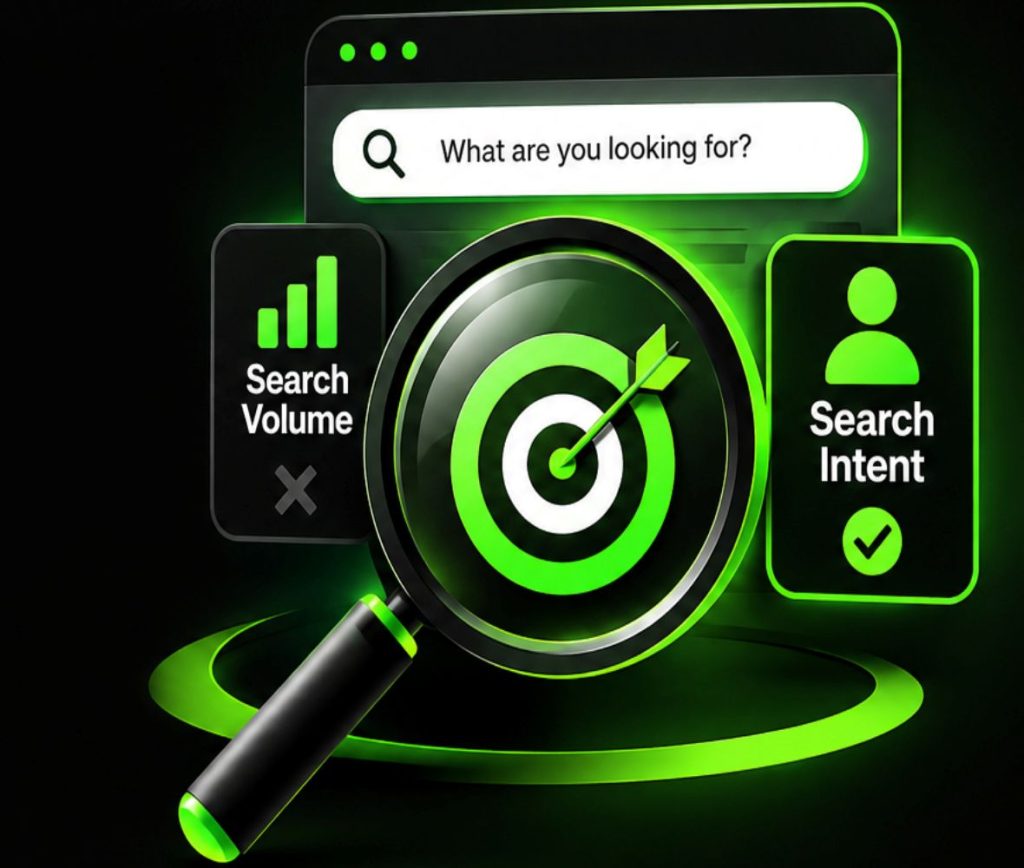
One of the most important parts of paid search is understanding why someone is searching.
Consider these searches:
The second may be comparing options. The third has a specific business use in mind. The person searching for pricing may already be much closer to making a decision. A good Google Ads strategy considers these differences. This means looking beyond search volume and asking:
Good campaign management begins before the first ad is launched. An agency should have a clear understanding of several things first.

Is the campaign intended to generate leads, calls, purchases, bookings, inquiries, or another action? The goal affects how the campaign should be structured and measured.

Who is most likely to become a customer? A campaign for a local service business may need a very different audience approach from a campaign for a B2B software company.

Businesses need to decide where they actually want customers from. This could be a city, state, country, or a combination of locations.

The campaign needs a clear view of the searches worth paying for. Not every related keyword deserves advertising budget.

The person clicking the ad needs a reason to take the next step. That might be a consultation, product purchase, quote request, booking, or another relevant action.

The destination page should support the promise made in the ad. A relevant search followed by an unrelated landing page creates unnecessary friction.

Before judging campaign performance, the business needs to know what counts as a conversion and whether those actions are being recorded correctly.

The available budget should match the market, competition, campaign goals, and amount of testing required. There is no single budget that works for every business.
| Business Question | Useful Metric | What It Helps You Understand |
|---|---|---|
| Are people responding to the ads? | CTR | Shows how often people click after seeing an ad |
| Are visitors taking action? | Conversion rate | Shows how effectively clicks turn into conversions |
| What does a lead cost? | CPL | Helps measure lead acquisition efficiency |
| Are the leads useful? | Lead quality | Shows whether advertising is attracting the right prospects |
| Is advertising generating sales? | Revenue / ROAS | Helps measure return from advertising spend |
| Where may budget be wasted? | Search-term data | Helps identify irrelevant or weak searches |
The right metric also depends on the business model. For an e-commerce company, revenue and return on ad spend may be central. For a B2B company, a lead may be only the beginning of the sales process, so lead quality and eventual sales matter more than the number of form submissions. And one point is easy to miss: A low CPC is not automatically a good result.
A cheap click that never becomes a customer may be less valuable than a more expensive click from someone who genuinely needs the product or service. Google also recommends focusing on conversion data and landing pages when the advertising goal is to increase conversions.
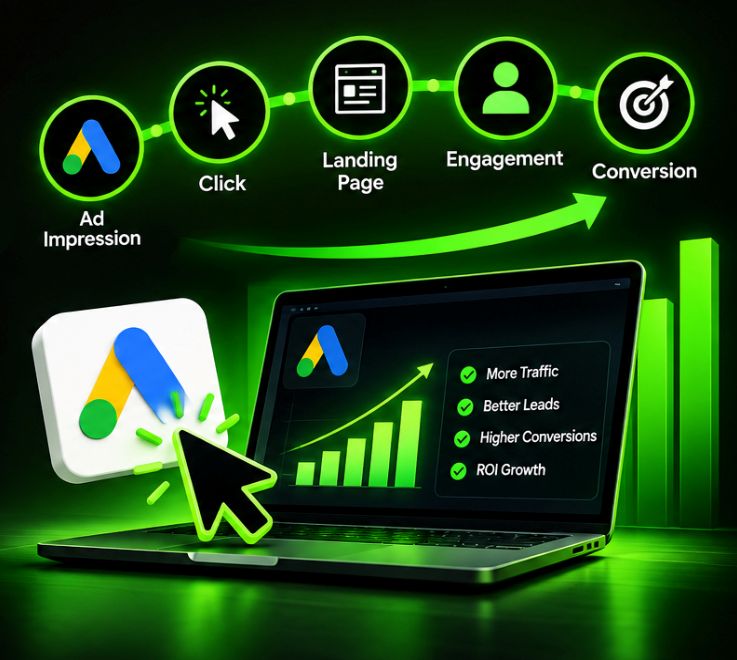
A Google Ads campaign is only one part of the customer journey. Think about the path:
A problem at any stage can affect the final result. For example, a relevant search may trigger a strong ad, but the visitor may leave because the landing page is confusing. Or the landing page may work well, but the conversion is not being tracked correctly. Even a good lead can be lost if there is no timely follow-up.
This is why paid advertising should not always be viewed as an isolated activity inside the Google Ads account. The website, landing pages, content, analytics, conversion tracking, and follow-up process can all influence what happens after the click. For businesses working with a Google Ads agency in India, this wider view can be useful because it helps identify problems that may not be visible from advertising data alone.
Not every business needs to outsource Google Ads from day one. In-house management can work when a business has someone with the right skills, enough time to manage the account, and a clear understanding of conversion tracking and campaign optimization. Agency support can become useful when:
A PPC agency in India can be useful when a business needs regular campaign management but does not have the time or specialist knowledge to handle everything internally. The decision should come down to the complexity of the account, available expertise, internal resources, and business goals.

Useful for reaching people who are actively searching for products or services. Search campaigns can be structured around relevant keyword groups and business priorities.

These can be relevant for e-commerce businesses that want to promote products across Google's advertising ecosystem.

These can support awareness, audience reach, and remarketing when visual or video advertising makes sense for the business.

Remarketing can help reconnect with people who have already interacted with a website or business but did not take the desired action.

Tracking helps connect advertising activity with actions that matter to the business, such as inquiries, calls, purchases, or bookings. The right mix depends on the business. More campaign types do not automatically mean better performance.
Calling an agency “No. 1” does not tell you how well it will handle your campaigns. The better questions are simple: Do they understand your business? Are they targeting the right searches? Can they track what matters? And do they keep improving the campaign instead of letting it run on its own?
At MKR Techsoft, we take a practical approach to Google Ads, from planning and campaign setup to tracking, testing, and ongoing optimization. Our wider digital experience also helps us look beyond the ad itself and understand what happens after someone clicks.
You can manage Google Ads yourself if you have the knowledge and time to do it properly. An agency may be a better choice if you need specialist expertise or regular campaign management.
Tell us about your project and we'll come back within one working day with a scope, timeline and fixed price.